Introduction: A Floor-Level View of Change
At 7:05 a.m., the inbound dock runs late and the picking lanes start to crowd. A pallet stacker sits idle by aisle D while three pickers push cages past it, heads down, scanning and re-scanning. In many sites like this, 12–18 minutes per hour vanish into dead travel, small detours, and waiting for a clear path (yes, it happens on good days too). Data shows mis-slotting near 0.6% and overtime up 20% during seasonal peaks—tiny numbers that grow into big losses when multiplied by thousands of pallet moves. The question is simple: how to smooth the flow without slowing the floor? In my view, we need a side-by-side look at options and their limits—what actually works under pressure, and what only looks good on a slide. We will compare approaches, check the hidden frictions, and ask how autonomy can do better—without drama, without mystery. Step by step, but not slow. Let us move from the noise to the signal, then into action.

Hidden Friction: Where Traditional Fixes Fail
Why do old playbooks break?
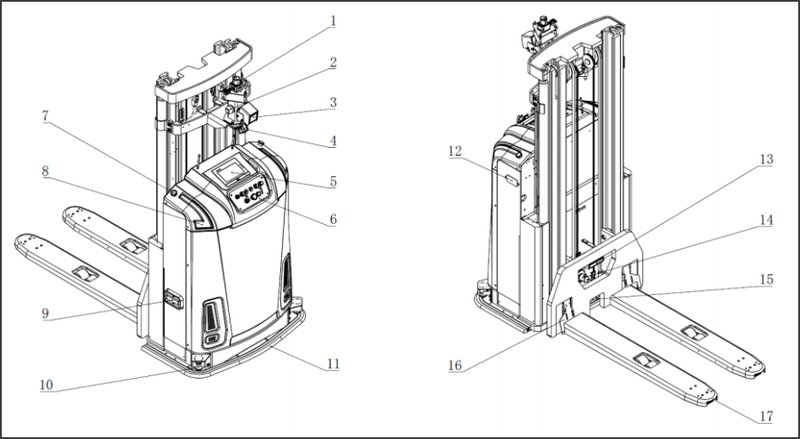
Many teams trial an autonomous stacker forklift for one week and expect magic, but old constraints often stay in the path. Tape or QR-code navigation cracks when aisles shift, pallets overhang, or racking moves by 20 cm—funny how that works, right? Legacy WMS handshakes update in batches, so the truck still “thinks” a lane is free. A safety PLC locked to fixed zones cannot adapt when goods expand beyond the pallet footprint. Meanwhile, LiDAR SLAM without good reflectors near dock curtains goes blind at sunrise. Add jitter on the CAN bus from a new drive unit, and you get tiny pauses that stack into minutes. Look, it’s simpler than you think: delay comes from small desyncs, not one big error.
Traditional add-ons also miss power and service realities. Power converters sized for steady AGV duty may choke on lift-and-hold cycles. Edge computing nodes sit two aisles away, so perception packets wait in a queue. Battery swaps happen at the wrong time because the charge model is fixed, not learned. Even the human handoff has friction: operators wait for a green light, then wave the robot through—two seconds here, four seconds there. Multiply by 500 moves, and the day ends short. These are the flaws that a quick retrofit cannot fix. They need an autonomy stack that speaks live to WMS, senses pallet variance, and plans paths that bend with the crowd, not against it (plain talk, practical needs).
Comparative Lens: New Principles, Real Gains
What’s Next
So what changes when we shift the core principles? First, perception: sensor fusion beats single-sensor bets. Combine LiDAR SLAM with 3D cameras at fork height to read fork pockets and detect shrink-wrap glare. Second, planning: micro-adjusted pathing outruns fixed routes. The system compares two costs in real time—short path vs. smooth path—and picks the faster in seconds, not minutes. Third, orchestration: edge computing nodes near each zone cut latency, while the fleet manager syncs with WMS via event-driven APIs. An autonomous stacker forklift built on these ideas avoids deadhead, rides the flow of people and carts, and trims waits at choke points. Add regenerative braking through smart power converters, and energy per pallet drops. It is semi-formal in theory, but very hands-on in life.
Now compare outcomes, not promises. With dynamic safety fields tied to a safety PLC, the truck slows early when a picker approaches, then recovers speed fast when the lane clears—no stop-start penalty. With API hooks, the WMS pushes slot changes instantly, so the robot does not bring a pallet to a lane that just flipped to overflow. And when overhang is detected, the forks nudge center-of-gravity to keep lift torque stable. Wait, did we just remove a bottleneck by adding one robot? In many pilots, yes, because the system reduces the invisible waste between moves. To choose well, keep three metrics in front: dock-to-rack cycle time in seconds per pallet; energy per pallet in Wh; and exception rate per 100 moves (mis-picks, re-routes, human assist). Track them for two weeks, compare against your current baseline, and decide with a clear head. For a grounded view of these principles in action, see SEER Robotics.