When Precision Becomes a Duty, Not a Feature
Precision is not a perk; it is a compliance obligation when you automate under contract. In a busy plant, robotics parts sit at the center of that duty, tasked with repeatable motion and traceable outcomes. Picture a night shift on final assembly: a wrist joint stutters, the end effector drifts, and the quality gate starts flagging units. The data is plain enough—2% downtime over a week, 0.6 mm variance on a critical seal, a dozen reworks that no one budgeted. Under any reasonable standard operating procedure, that variance hits the warranty regime and the chain-of-custody logs. So the question is simple: are the parts chosen fit for purpose, or are they passing risk downstream by design?
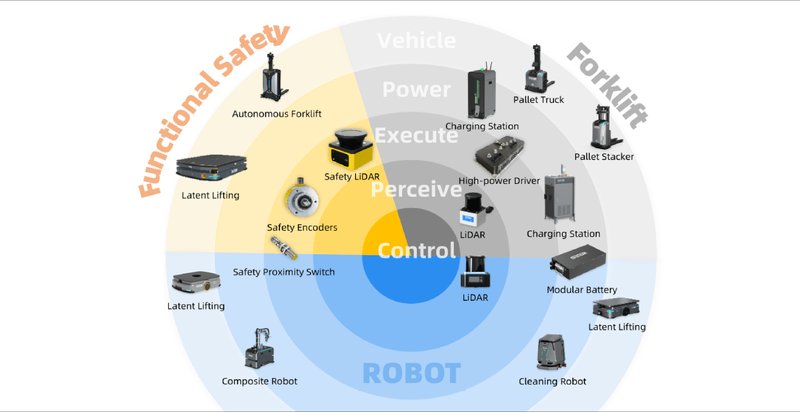
Look at how the servo loop, the fieldbus stack, and the mechanical drivetrain interact. One weak element cascades into noise, heat, and drift. That is how a sub‑spec reducer becomes a scrap problem—funny how that works, right? The legal reading is cold: foreseeable failure should be mitigated at the component level. The practical reading is warmer: pick parts that do not push defects into inspection. Let’s move from the floor reality to the root causes.
The Hidden Cost of “Good Enough” Assemblies
Where do the cracks start?
Technical view first. Many lines still rely on mixed‑vendor stacks of industrial robot parts that were never tuned as a system. A harmonic drive rated for torque peaks meets a motor sized for averages. The power converters filter noise at one frequency, while the encoder spews it at another. Edge computing nodes run vision at the cell, but the servo loop still waits on a congested fieldbus. The result is micro‑latency that looks like slop. You feel it as chatter in the wrist and see it as taper in a bead. The parts are “within spec,” yet the assembly performs below intent. In law, that is a foreseeability gap; in practice, it is a pay‑me‑now or pay‑me‑later choice.
Now the human pain point. Maintenance teams inherit a black box that is not black—just undocumented. They juggle vendor portals, firmware keys, and spare bins that never match. Mean time to identify root cause stretches, while buffers shrink. Look, it’s simpler than you think: the flaw is not the single bearing or the single board. It is the interface between them. Force‑torque sensors mask a backlash issue. A quick vision tweak hides slip in the gripper. Each patch piles on error budget until calibration becomes a ritual instead of a fix. That is why “good enough” parts feel expensive even when the unit price says bargain.
Principles That Actually Move the Needle
What’s Next
Semi‑formal, comparative lens now. Systems built on unified principles—synchronous clocks, deterministic networking, and matched thermal profiles—show fewer surprises under load. Instead of stacking upgrades, they align specifications across the bill of materials. The encoder is specced to the motor’s ripple; the reducer’s stiffness tracks the cycle; the cable harness manages EMI for the entire motion path. When industrial robot parts share timing, noise budgets, and lifecycle ratings, calibration becomes lighter and quality stays inside the gate. This is not magic. It is control theory meeting procurement discipline.
Consider two cells. The legacy cell swaps a motor and patches its PID. It runs—until the next variance. The forward cell starts with a shared motion profile, ties servo loops to a deterministic bus, and keeps the vision stack on the same clock. Edge buffering smooths inference, and the end effector geometry is validated to the reducer’s torsional model. Same workload, fewer interventions. The gain is dull but durable: steadier cycle times, lower heat, cleaner wear. And when something fails, the fault tree is short because interfaces were designed, not improvised. That is how next‑gen assemblies outpace the old guard—by removing places for error to hide.
Choose Like a Pro: Three Metrics That Matter
To translate all this into action, use three clear checks. One, interface determinism: require proof that timing across motor, encoder, and controller is synchronized under load (not just at idle). Two, error budget transparency: vendors must map stiffness, backlash, and EMI contributions for each component, then sum to a cell‑level variance target. Three, lifecycle coherence: match duty cycles and thermal envelopes so power converters, drives, and reducers age together instead of failing in sequence—funny how staggered fatigue amplifies cost, right?
Keep the language simple on the spec sheet, but firm in practice. Ask for test artifacts, not adjectives. Verify under the actual payload, not a lab proxy. If the answers are clean, your quality gate gets quiet, your rework bin stays light, and your night shift stops holding its breath. For further technical reading and system‑level examples, see SEER Robotics.